SAURUS Bear Traps Guide
Spot spring-loaded clamps in open grass and dark corners, recover after a snap, and keep the party from feeding dinosaurs free kills.
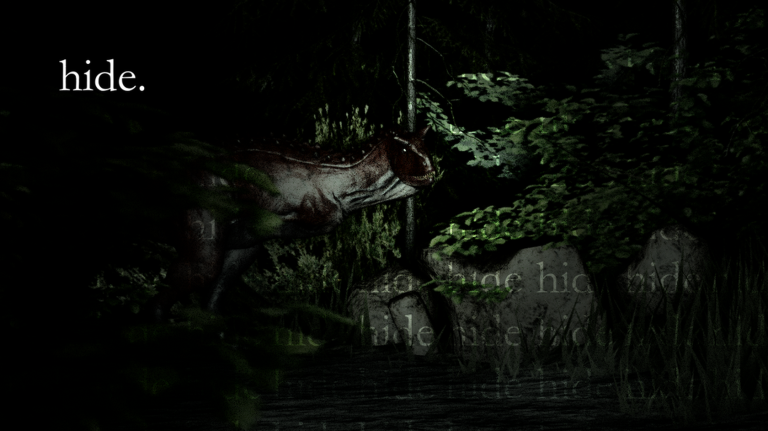
Bear traps are the quiet run killers in SAURUS [HORROR]. Pegasi Games hides spring-loaded clamps in open grass and dark trail corners across the enclosure. Stepping on one clamps your feet and slows movement—often right when a T-Rex or Carnotaurus is close enough to finish the job. This guide is the dedicated hazard page for trap discipline. Use it beside Survive Dinosaurs for predator timing, Scent Mounds for odor tools after a noisy snap, and Fuse Locations for the routes that force grass crossings.
If the map still feels like a black maze, read Enclosure Map so you know which clearings and corners deserve a ground sweep before you cut straight lines.
Why traps end more runs than they “should”
Dinosaurs are loud and obvious. Traps are not. Players die to clamps for three overlapping reasons:
- Flashlight aimed at the sky — you see trees, not metal jaws.
- Panic shortcuts through open grass — the shortest line between two laptop glows is rarely the safest.
- Greed after a snap — limping toward “one more fuse” while slowed turns a mistake into a free kill.
You cannot fight the hunters. You can refuse to immobilize yourself in front of them.
Where bear traps show up
Expect clamps in:
- Open grass between landmarks—spawn lawn approaches, valley clearings near dead trees, and yards outside the Center Building fence line
- Dark trail corners where dirt paths bend around rock walls or pine brush
- Shortcuts players invent under pressure when the red beacon looks close but the road curves
They are less of a problem on clean interior floors inside the Center Building generator room and corridors. The danger spikes the moment you leave a side fence gate onto perimeter dirt. Fuse #4’s wide dead-tree clearing and any mid-yard sprint toward the blast-gate road deserve extra ground checks.
White utility jeeps at intersections are still useful breadcrumbs, but do not stare only at the jeep roof lights—drop the beam to the grass as you pass.
Flashlight-low technique
The flashlight is information, not a spotlight show. Keep the beam aimed toward the ground when you cross grass or trail corners so metal jaws catch the light before your ankles do. Wild vertical swinging reduces contrast and makes night traversal worse.
Practical habits:
- Lead with a low sweep for two seconds whenever you leave a doorway into vegetation
- After every laptop pickup, re-aim down before you rotate home
- In co-op, agree who leads with the beam so five cones do not create visual noise
- On mobile, fight the urge to keep the camera high for “drama”; trap reads matter more than cinematic framing
Bind and platform notes live on Controls. If interact or crouch feels awkward while you try to recover from a clamp, fix inputs there first.
What happens when you get clamped
Stepping on a trap snaps the jaws and slows you. The snap is noisy relative to careful crouch movement. Assume three things the moment it happens:
- You are now slow.
- You are now louder than you wanted to be.
- Any nearby dinosaur has a better chance to close the gap before you reach shelter.
Do not treat the clamp as a minor inconvenience you can ignore while still cutting across the middle of a clearing. The trap’s job is to convert a near-miss into a meal.
Recovery after a snap
Survive the next twenty seconds, not the next fuse:
- Break line of sight toward the nearest building, rock wall, or dense pine cover
- Abort greed — do not limp toward an extra workstation while clamped if a roar is close
- Use a scent mound if one sits on the path home; mask, then commit to the Center Building or a doorway (Scent Mounds)
- Door-check before you re-enter the yard after you recover; stomping may already be swinging toward your noise
- Bank what you carry at the yellow generator when you arrive—progress on the meter matters more than ego
If you die anyway, remember early deposit rhythm from How to Escape: a death after ~33% or ~83% hurts less than a death with an unbanked stack.
Route choices that reduce trap risk
Prefer dirt road edges and known jeep→beacon chains over diagonal grass cuts. On the teaching fuse order (spawn table → Center Building → pine brush → dead trees → ridgeline → lower dirt road), the widest trap risk usually sits in the valley clearing and any improvised shortcut back to the red floodlights. When the dinosaur camps the compound, crouch along chainlink instead of cutting the open yard—even if the grass looks empty.
Challenge Mode does not remove traps; heavier dinosaur pressure simply makes every clamp more expensive. Read Challenge Mode once normal clears feel stable.
Co-op callouts that save parties
In groups of two to five, traps become a communication problem. One silent clamp can wipe a stacked escort if nobody warns the trailing runners.
Establish simple callouts:
- “Trap left / trap right” when metal catches a beam
- “I’m clamped” immediately so the lookout can call dinosaur facing
- “Hold—grass check” before a squad cuts a clearing
- No pile-up on the same narrow corner; five people zigzagging the same jaws is comedy until it is not
Assign a lookout who watches predators and a runner who watches the ground. Role discipline for fuse ferrying and door watches sits on the Players hub and in Co-op Tips. Solo survivors who must watch the ground alone should also skim Solo Tips. Never have the whole lobby spam-jump near a known trap corner while inserting at the generator—noise stacks.
Solo trap discipline
Solo survivors must wear every hat. Build a rhythm: low beam → listen → step → pickup → low beam again. Never skip the ground check after a roar scare; fear makes players sprint diagonals straight into clamps. Landmark memory from Enclosure Map keeps you on safer dirt instead of inventing deadly shortcuts.
Quick checklist
- Flashlight low in grass and trail corners
- No diagonal panic cuts across valley clearings
- After a snap: cover, scent if available, abort greed, bank at generator
- Co-op: call traps and clamps out loud
- Pair trap awareness with doorway waits and scent windows
Related guides
- Survive Dinosaurs — hunters that punish immobilized players
- Scent Mounds — odor mask after noisy mistakes
- Fuse Locations — routes that cross trap-prone grass
- How to Escape — deposit timing so trap deaths cost less
- Enclosure Map — landmark paths that stay on dirt
- Controls — flashlight and crouch inputs
- Solo Tips — one-player ground discipline
- Guides Hub — full tutorial index
Respect the ground. In SAURUS the dinosaur is the headline threat, but the bear trap is the setup that makes the headline possible.
Frequently Asked Questions
Quick answers for SAURUS survivors.
Where do bear traps spawn in SAURUS?
Primarily in open grass and dark trail corners along perimeter paths and clearings. Keep your flashlight aimed at the ground when you leave buildings for dirt trails.
What happens if a bear trap clamps you?
Your movement slows and the snap draws attention. Break line of sight, skip greedy pickups, use a scent mound if available, and bank carried fuses as soon as you reach the generator.
How do I spot traps at night?
Use the flashlight-low technique: sweep the beam across grass and corners so metal jaws catch the light before you step on them.
Should co-op teams call out traps?
Yes. Call trap sides and clamp status immediately so lookouts can track dinosaurs and trailing runners do not stack into the same jaws.